
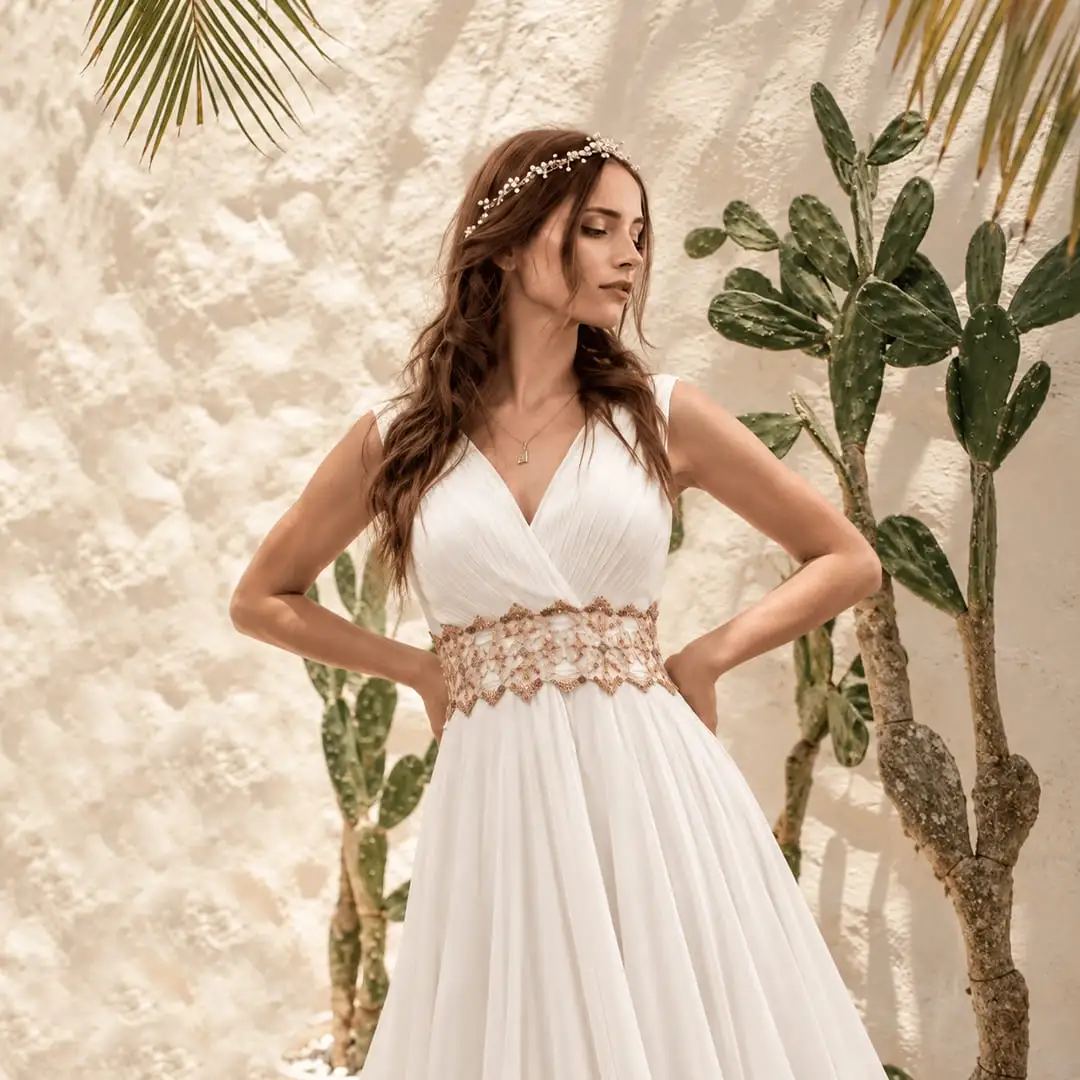
Think about the dress you reach for without hesitation when you open your wardrobe. It can be oversize, louder than everything else you own, unexpectedly simple, strangely proportioned, or in a color that you were once told you should never wear. It might be doing several things wrong, as per the traditional style advice.
Yet, you’ve fallen in love with it. Something important regarding your personal style is revealed by that contradiction. It’s not necessary that the clothes you love obey all the fashion rules. Often, these are the pieces that understand the wearer better than the rulebook does.
So, why can breaking supposedly useful style rules produce such satisfying outfits? The answer begins with understanding what those rules were designed to accomplish.
Many familiar fashion rules exist for practical reasons. Certain proportions can create visual balance. Particular color combinations can produce contrast. Different silhouettes can emphasize or soften particular areas.
That does not make those principles universal.
A styling guideline describes one possible visual effect. It does not determine whether an outfit is attractive, appropriate, or enjoyable to wear.
Consider the familiar idea that loose clothing should always be balanced with something fitted. A voluminous dress immediately disrupts that formula because the entire garment may deliberately create an oversize silhouette.
Does that automatically make the dress unsuccessful?
Of course not.
The volume itself might be the feature that gives the garment character.
Learning why a rule exists is useful. Considering that rule as compulsory can make dressing unnecessarily restrictive.
A substantial amount of traditional styling advice revolves around creating particular body proportions.
Define this area. Lengthen that one. Minimize something else. Create the illusion of a different shape.
Your favorite dress may refuse to participate.
Perhaps it has a dropped waist even though conventional advice suggests emphasizing your natural waist. Maybe it is an oversize shift that barely acknowledges your silhouette. Perhaps it has dramatic sleeves that intentionally add volume rather than visually reducing it.
Yet you continue wearing it because you enjoy the overall effect.
This highlights the difference between dressing to correct proportions and dressing to create an interesting silhouette.
Clothing does not always need to make the body appear taller, narrower, curvier, or more symmetrical. Sometimes shape can simply be expressive.
Once you quit asking whether a dress creates the supposedly ideal proportion, you can start asking a much more useful question: do I like what this silhouette is doing?
Color advice can become surprisingly complicated.
People are frequently encouraged to determine which shades complement their undertones, complexion, hair, wardrobe palette, or existing accessories.
Those systems can certainly help narrow an overwhelming selection. Problems begin when helpful recommendations become rigid restrictions.
Suppose your favorite dress is a color that theoretically does not belong in your recommended palette.
You still feel fantastic wearing it.
That reaction matters.
Color affects more than complexion. It influences mood, contrast, visual presence, styling possibilities, and the overall personality of an outfit.
A supposedly unsuitable shade might work because you pair it with particular accessories. Perhaps you simply enjoy the stronger contrast it creates. Maybe the color makes an otherwise straightforward dress considerably more interesting.
A color chart cannot measure your enthusiasm when you put something on.
Another common rule encourages matching the visual intensity of an outfit precisely to the occasion.
Useful? Certainly.
Absolute? Not necessarily.
Some people naturally enjoy dressing slightly above the expected level. A dramatic sleeve at an ordinary dinner, an elaborate print during a casual afternoon, or an unusually structured dress for a relaxed gathering can become part of personal style.
The distinction worth making is between intentionally standing out and accidentally misunderstanding the setting.
Context still matters. Some environments have actual dress requirements that deserve consideration.
Outside those situations, however, there is often more flexibility than people assume.
If your favorite dress makes an ordinary outing feel slightly more interesting, that does not mean you have overdressed. It may simply mean your definition of everyday clothing has more personality.
Prints, textures, colors, accessories, and silhouettes are often presented through neat compatibility formulas.
Keep one element dominant. Avoid competing patterns. Match certain accessories. Do not combine too many textures.
Then along comes your favorite dress with an unusual print, textured fabric, decorative neckline, unexpected color combination, and absolutely no interest in behaving quietly.
Some designs work precisely because they contain controlled visual tension.
Contrast gives the eye something to explore.
The secret is usually not simplicity but hierarchy. Several interesting elements can coexist when the design still provides somewhere for the eye to settle.
This applies to styling too. A patterned dress does not automatically require completely neutral accessories. Sometimes another strong element makes the outfit feel more intentional.
The question is not whether multiple details are present.
It is whether they appear to be having the same conversation.
Your frequently worn dress might not be the visually impressive garment in your wardrobe.
Perhaps it simply feels fantastic.
That matters enormously.
A dress that allows comfortable sitting, walking, eating, commuting, and moving has an advantage that photographs cannot fully communicate.
Comfort also changes how clothing is worn.
When you are not constantly pulling down a hem, repositioning a neckline, adjusting straps, or wondering whether something has shifted, your attention moves away from the garment.
The dress starts working for you rather than demanding supervision.
That ease can make a relatively unconventional silhouette more successful than a theoretically flattering dress that requires constant maintenance.
Wearability deserves a much larger role in style decisions than it sometimes receives.
There is another rule your favorite dress may be breaking: the idea that repeating outfits is somehow unimaginative.
If you actually love a dress, you will probably wear it repeatedly.
That is a success.
Frequent wear reveals that the garment works with your lifestyle, feels comfortable, suits your preferences, and coordinates easily with your wardrobe.
Instead of avoiding repetition, experiment with it.
Change footwear. Add a layer. Switch accessories. Adjust the styling according to weather or occasion.
The same dress can support several visual directions without needing to disguise the fact that you have worn it before.
A wardrobe becomes more useful when favorite pieces earn repeat appearances.
Style rules can teach useful fundamentals about proportion, color, coordination, fit, and context. Learning them can make shopping and outfit building easier.
But there is an important difference between understanding a rule and obeying it automatically.
Your favorite dress probably became your favorite because something about it feels unmistakably right for you.
Maybe it breaks the recommended proportion. Perhaps the color is supposedly unsuitable. Maybe it is louder, simpler, longer, looser, or stranger than conventional advice recommends.
That information is valuable.
Instead of viewing the dress as an exception, study it. Ask what you repeatedly enjoy about it. The answer might reveal more about your personal style than dozens of generic recommendations ever could.
The interesting wardrobes are rarely built by following every style instruction without question.
Rules can provide structure, especially when you are experimenting with unfamiliar silhouettes or learning how different elements interact. But they should function as tools rather than fences.
Your favorite dress may already be proving that point.
If you repeatedly choose a garment that supposedly violates the rules, there is probably a reason. Its proportions may make you feel expressive. Its unusual color might energize your wardrobe. Its relaxed shape may provide the comfort you value. Its dramatic details might simply make getting dressed more enjoyable.
Pay attention to those preferences.
Because discovering personal style is not about becoming exceptionally good at following rules.
Sometimes it begins when you discover which ones are worth breaking.